The Twelve-Year-Old at the Front Desk: What My Parents' Paperwork Taught Me About Power
The Letter That Arrived Every Spring
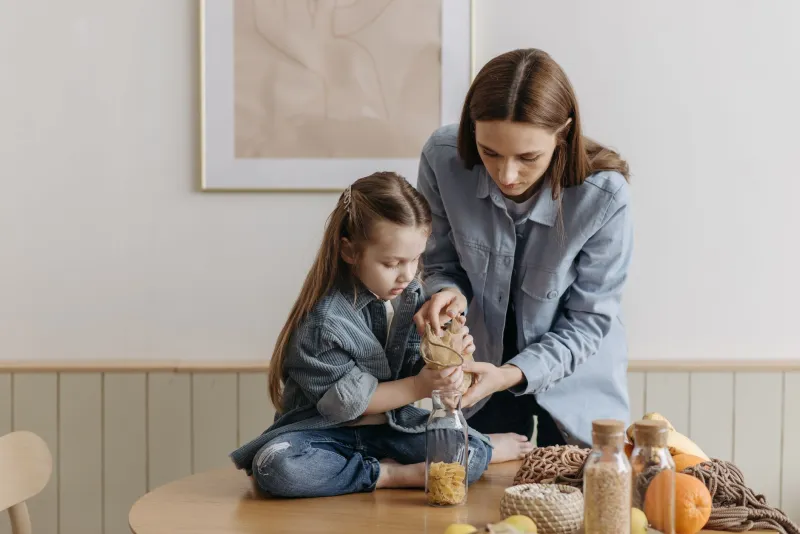
Every spring, a thick envelope from the county arrived at our house in Dearborn, and every spring it landed on the kitchen table next to the olive oil bottle, unopened, until I got home from school. I was eleven, then twelve, then thirteen. By the time I understood what a property tax assessment was, I had already explained one to my father a dozen times.
Nobody assigned me this job. There was no title, no training, no line in the household budget for it. But like thousands of children of immigrants across the United States—from Detroit to Anaheim to Bay Ridge, Brooklyn—I became the family's unofficial translator before I became anything else.
Fluency as Family Labor
The tasks came in an endless rotation. The doctor's office wanted a medical history my mother couldn't narrate in English, so I sat in on appointments that a twelve-year-old had no business attending, relaying questions about symptoms I had to look up afterward in the family dictionary. The bank called about a discrepancy in an account. The school sent home forms with checkboxes my father couldn't parse. The insurance company sent a denial letter written in English so deliberately convoluted that even I, the designated expert, had to read it twice.
What strikes me now, decades later, is not the inconvenience. It is the inversion. In most cultures, parents introduce children to the world. In immigrant households, the world is introduced to parents by their children. A seventh grader with a decent vocabulary and a straight face becomes the household's representative to American institutions—and, in a real sense, those institutions' representative to the household.
What the Child Learns in the Waiting Room
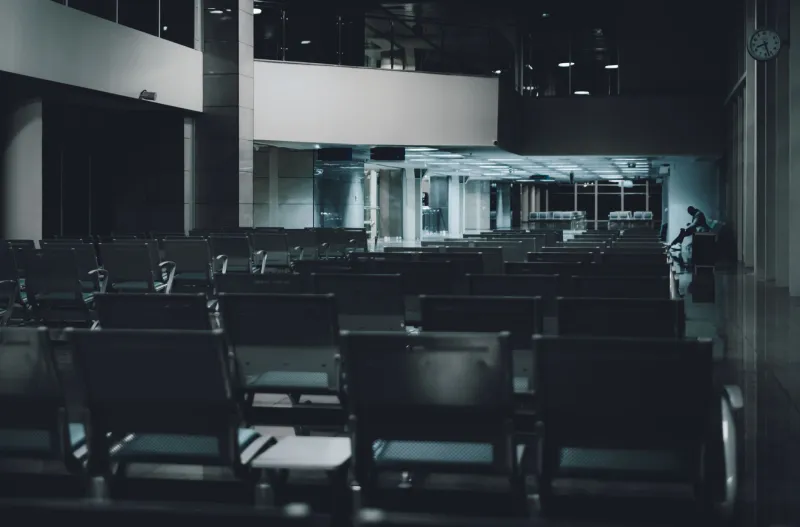
You learn power early in a hospital lobby. You learn that a form can decide whether a family keeps its home, that a receptionist's tone can humiliate an adult who is accomplished, capable, and wise in every language except the one that matters in that room. You learn that English, in America, is not merely a language. It is a credential, a key, a small sovereignty.
You also learn discretion. Children who translate for their parents become custodians of information—about debts, diagnoses, disputes—that their peers are nowhere near carrying. There is a particular kind of maturity that comes from knowing, at thirteen, exactly how much your father's small business owes, and from keeping it to yourself at the lunch table the next day.
And you learn love in a dialect no one names. My parents never said thank you for the translation work, because in our household it was not a favor. It was filial duty, as natural as setting the table. The Arabic we spoke at home had a word for obligation—wajib—and that word did the work of a hundred conversations about gratitude.
From Kitchen Table to Career
Here is the part that rarely makes it into policy discussions about language access: this childhood labor does not stay in childhood. Ask around any Arab American professional community and you will find a disproportionate number of immigration attorneys, social workers, hospital interpreters, public school teachers, and civil servants who trace their careers to a specific memory—sitting between their mother and a clerk, making the system legible.
The pattern is not accidental. Children who translate grow into adults who cannot stand watching someone else sit, helpless, in that same waiting room. Some of us institutionalized the instinct. Others of us ran from it, choosing careers precisely because nothing in them resembled a government form. Both responses, I would argue, come from the same place.
It shapes politics, too. Second-generation Americans who spent their childhoods as intermediaries tend to read bureaucracy with unusual skepticism. We watched our parents—law-abiding, taxpaying, endlessly careful—stumble not because they were deficient but because the systems around them were built for someone else. That observation, absorbed at age twelve, does not evaporate at the ballot box. It surfaces in opinions about language access mandates, about immigration paperwork, about whose comfort the default settings of American life are designed around.
The Case for Taking It Seriously
I want to be careful not to romanticize this. Researchers who study what is sometimes called parentification note that children carrying adult burdens can pay real costs—in anxiety, in academic focus, in the simple freedom to be a kid. The answer is not nostalgia. It is infrastructure: funded translation services at hospitals and courts, plain-language notices in Arabic and other languages, schools that recognize a parent conference conducted through a child is a system failure, not a family arrangement.
But I also want to resist framing these children purely as victims. What we did was work, yes, and it was heavy. It was also, for many of us, the first place we experienced ourselves as useful, as necessary, as belonging to something larger than our own report cards. The labor was real. So was the meaning.
The Envelope, Revisited
Last year my father, now in his seventies, received another letter from the county. He opened it himself. He read it slowly, out loud, in careful English, and then he looked up at me—not for translation, but for confirmation. I confirmed, and he nodded, and filed it away in the cabinet he has organized himself for forty years.
I felt something I did not expect: a small, complicated grief. The job I never applied for had ended, and with it a version of myself. But underneath the grief was something steadier—the recognition that the child at the kitchen table had been doing more than translating documents. She had been learning how power works, how family works, and how a person stands between two worlds without belonging entirely to either.
That is an education no school offered. It is one the diaspora gives away for free, every afternoon after the school bell rings.