Lost in the Record: The Arabic Words That Follow Immigrants Into American Courtrooms
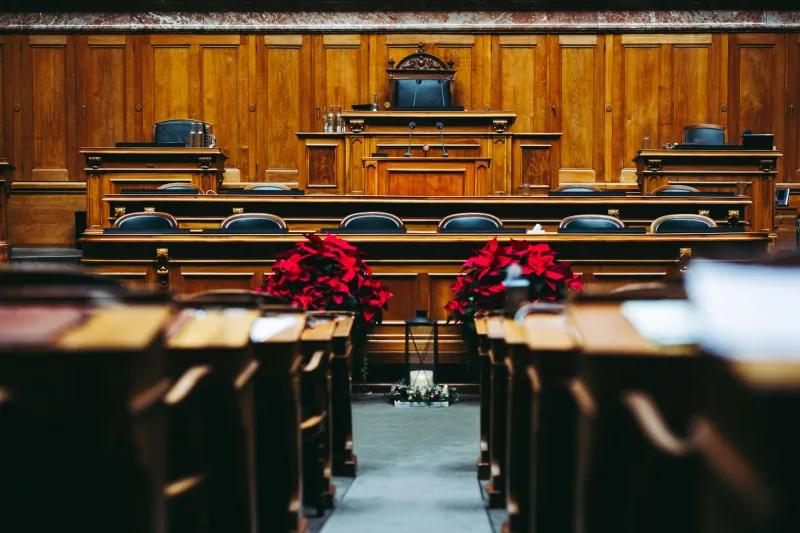
There is a moment, familiar to nearly every Arabic interpreter working in an American courtroom, when a word arrives that has no clean landing place in English. The witness says wasta. The transcript, eventually, says "influence" — or worse, "bribery." A cultural concept describing connection and mediation becomes, on paper, a criminal act.
Multiply that moment across thousands of family court hearings, asylum interviews, and immigration proceedings each year, and you begin to see the scale of the problem: a legal system that prides itself on precision, rendering life-altering decisions based on translations that flatten, distort, or invent meaning.
When a Word Becomes a Verdict
The stakes are not hypothetical. Attorneys who represent Arabic-speaking clients describe cases in which a mistranslated phrase shifted a credibility finding. A woman testifying in an asylum hearing who said she would return home inshallah — God willing — was interpreted as expressing uncertainty, even indifference, about her own return. The adjudicator read it as evasiveness. In reality, the phrase is a near-universal conversational habit, closer to "hopefully" than to a statement of doubt.
Similarly, the expression bismillah at the start of testimony, or yallah used to move a story along, can read to an English-only ear as hesitation or flippancy. An interpreter who renders a father's description of family obligation as "he controls her" rather than "he is responsible for her" has not merely translated poorly — he has altered the legal character of a relationship.
"The record is the case," one Michigan immigration attorney explains. "If the record is wrong, you can argue all day. You're arguing against a piece of paper that says something the witness never said."
The Interpreters Pushing Back
A loose network of certified interpreters, bilingual attorneys, and community legal aid organizations has begun pushing for systemic reform. Their proposals are pragmatic: mandatory training in cultural pragmatics, not just vocabulary; certification exams that test regional variation — Levantine, Gulf, Egyptian, Maghrebi — rather than a single standardized register; and the right, already recognized in some jurisdictions, for interpreters to flag untranslatable terms on the record.
Some courts have begun experimenting. A handful of state courts now allow interpreters to interject a brief clarification — "the witness used an idiomatic expression" — without seeking permission. Veteran interpreters describe this as a quiet victory, one hearing at a time.
The deeper obstacle is structural. Certification requirements vary wildly by state and by court type. Federal immigration proceedings, which handle a large share of Arabic-language cases, rely on contract interpreters with inconsistent oversight. And in rural jurisdictions, a court may take whatever bilingual body is available — a clerk's cousin, a bailiff who studied abroad — with predictable results.
A Practical Guide for Families and Advocates
For readers helping a relative through the system, attorneys offer concrete advice.
Request a certified interpreter in writing, in advance. Courts are obligated to provide one in many proceeding types, but requests made on the day of a hearing often go unmet.
Ask the interpreter's qualifications on the record. It is a legitimate question, and asking it creates a record that can support an appeal if the translation was flawed.
Brief your attorney on idioms. If a witness uses expressions like inshallah, wasta, or haram in daily speech, the lawyer should know — and can prepare to ask clarifying questions that put the true meaning into the record.
Review translated documents before signing. Settlement agreements, affidavits, and plea paperwork translated hastily have produced genuine harm. A second pair of eyes, even informal, is worth the hour.
Speak up, politely. If a translation sounds wrong, either party can say so. Judges would rather pause for thirty seconds than discover the error in an appellate brief.
Language Is Not a Technicality
There is a temptation to treat translation as plumbing — invisible infrastructure, noticed only when it fails. But for diaspora communities, the courtroom is one of the few places where the state speaks directly into their lives, and it speaks to them through an interpreter.
Reform advocates are not asking for poetry. They are asking for accuracy: a system that understands that inshallah is not a lie, that wasta is not always a bribe, and that a person's fate should not hinge on a word the court never actually heard. Until then, the burden of clarity falls, unfairly, on the people with the least power in the room — which is precisely why they are organizing to change it.