Proof, Patience, and the Middle Aisle: How Arabic Baking Found a Home in the Midwest
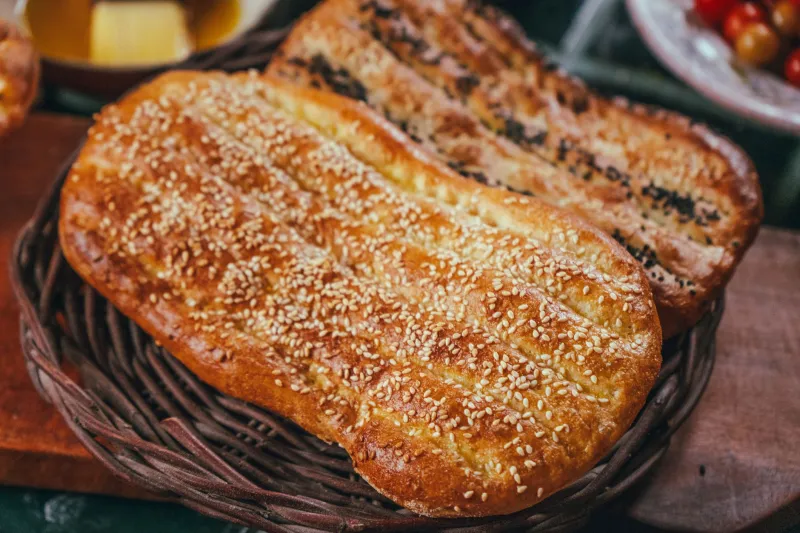
The freezer aisle of a suburban Costco outside Dearborn, Michigan, is an odd place to witness cultural history. Yet there it sits: bags of pita bread, produced by a regional bakery, stacked beside the tortillas and naan — a fixture of the American middle aisle that would have been unthinkable a generation ago.
For the Arab American communities that settled the industrial Midwest in the early twentieth century, bread was never just bread. It was the taste of home carried in a suitcase, reproduced in cramped Detroit kitchens with flour milled by whatever the neighborhood grocery could source. Today, that same bread is a multimillion-dollar category, and the people reshaping it are the grandchildren of those first home bakers.
From the Kitchen Table to the Commercial Oven
"My grandmother baked because she had to," says Rania Haddad, a second-generation baker in Dearborn whose family operation now suppliesmana'eesh to coffee shops across three states. "My mother baked because she wanted to hold on to something. I bake because customers ask me to. Somewhere in there, tradition became a business."
That trajectory — necessity, then nostalgia, then commerce — is a familiar arc in American food history. What distinguishes the Arabic baking boom is its speed. Za'atar manakish appeared on café menus in Chicago and Minneapolis within a decade of hummus becoming a supermarket staple. Date-filled cookies, once reserved for Eid trays and church fundraisers, now show up in holiday gift boxes marketed to general audiences.
The Midwest has been the unlikely engine of this expansion. Lower commercial rents, dense community networks, and wholesale buyers eager for "authentic" products have made cities like Dearborn, Cleveland, and Toledo proving grounds for family bakeries going regional.
Scaling Without Losing the Soul
The hard question, every baker interviewed for this piece raised unprompted, is what happens to the food when the volume multiplies. Industrial proofing cabinets and dough sheeters can produce a pita pocket in seconds; the home version relies on a hot oven, a watchful eye, and a feel for the dough that resists instruction sheets.
Haddad's compromise is deliberate: machines handle the mixing, but every batch of her mother's za'atar topping is still blended by hand, because, she says, the oil-to-herb ratio "is an opinion, not a formula." A Toledo-based cookie maker, who asked that her business not be named while she negotiates a national distribution deal, described rejecting a co-packing contract when the prospective partner's recipe called for substituting margarine for samna. "At that point, it's shaped like a maamoul and tastes like nothing," she said. "I'd rather stay small and be right."
Not every purist stance survives contact with the market. Shelf-stability requirements have pushed some producers toward preservatives, and a few heritage recipes have been quietly adjusted — less orange blossom water, more vanilla — to suit broader palates. Food historians note this is how assimilation has always worked on the plate: the recipe bends, the category survives.
The TikTok Effect
Social media has accelerated everything. Baking influencers have turned ka'ak and fatayer into viral weekend projects, and supermarket buyers now cite search trends alongside sales data. For younger Arab Americans, the visibility is double-edged: gratifying to see their grandmothers' cooking celebrated, uneasy watching it rebranded as a discovery.
"It went from being the lunch kids were embarrassed about to being a trend," Haddad says. "I'm glad it's popular. I just want people to know it was never a trend. It was Tuesday."
That distinction — between a cuisine and a moment — may be the real measure of whether Arabic baking has truly arrived in mainstream America. The bread on the Costco shelf suggests it has. The bakers guarding their grandmothers' ratios suggest it intends to stay.