Twenty Minutes, Two Languages, One Congregation: Inside the Remaking of the American Khutbah
The Sermon That Needed Subtitles
For decades, the Friday sermon in American mosques followed a predictable rhythm: an Arabic khutbah delivered by an imam trained abroad, followed by a hurried English summary for the teenagers slouched in the back rows. Parents listened to counsel drawn from the villages and cities they left behind. Their children listened—or didn't—to a translation that arrived too late and said too little.
That arrangement is coming apart, and not quietly. Across the country, a cohort of imams and khateebs raised in American public schools and American universities is taking the microphone and delivering sermons that sound, to the surprise of many longtime congregants, like they were written for the room they are actually in.
Chicago: The Khateeb Who Talks About Burnout
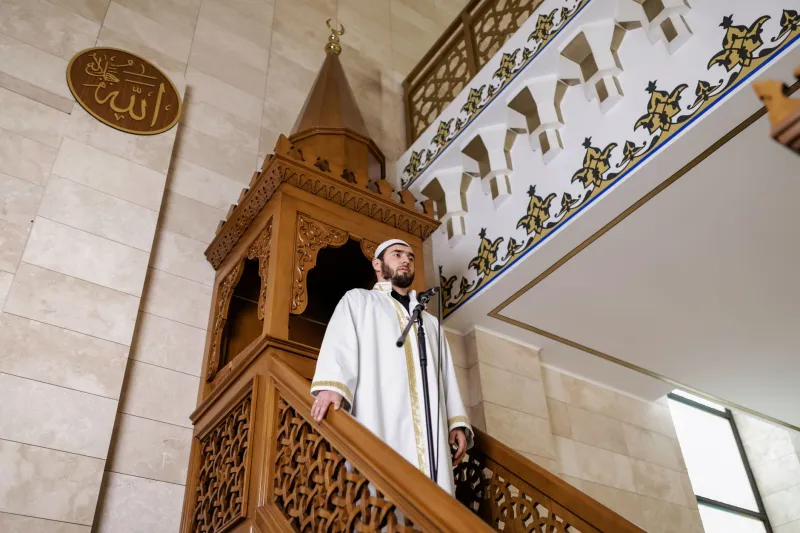
On a frigid Friday in the southwest suburbs of Chicago, a young khateeb opened his sermon not with a classical exhortation but with a question: how many in the congregation had checked their work email during the past week's anxiety spiral? The older men in the front shifted. The college students in the back looked up.
This is the new register. Imams in their thirties, many with day jobs in engineering, medicine, or social work, are folding mental health, workplace ethics, and civic participation into sermons that once centered almost exclusively on ritual observance. One Chicago-area mosque now runs a post-sermon session where a licensed therapist answers questions the khutbah raised—filled, reportedly, by fathers who came for the prayer and stayed for the conversation.
The shift is not merely thematic. It is linguistic and structural. Sermons are shorter. Anecdotes come from the Dan Ryan Expressway and the suburban high school, not only from the Prophet's Medina. Quranic Arabic is still quoted—but always translated, always explained, always tied to a life the listener recognizes.
Virginia: The Mosque as Civic Classroom
In Northern Virginia, where mosque parking lots fill with cars bearing federal agency badges, the Americanized khutbah has taken on a distinctly civic character. Khateebs discuss jury duty, school board elections, and the ethics of public service. One imam described his Friday role as part chaplain, part civics teacher: his congregants are not immigrants wondering whether to engage with American institutions but citizens deciding how.
This practicality has consequences. Mosques that once kept a careful distance from local government now host candidate forums and voter registration drives. The sermon, traditionally a space of moral generalities, has become a place where the abstract and the municipal meet—where a verse on justice is followed by the practical mechanics of a county zoning hearing.
The Friction in the Pews
Not everyone welcomes the change. At several mosques, older congregants complain that English-language sermons dilute the spiritual gravity of the occasion, that references to therapy and student loans flatten a tradition they crossed an ocean to preserve. A few have lobbied boards to restore the Arabic-first format, arguing that the khutbah is among the last weekly anchors of the language their grandchildren are losing.
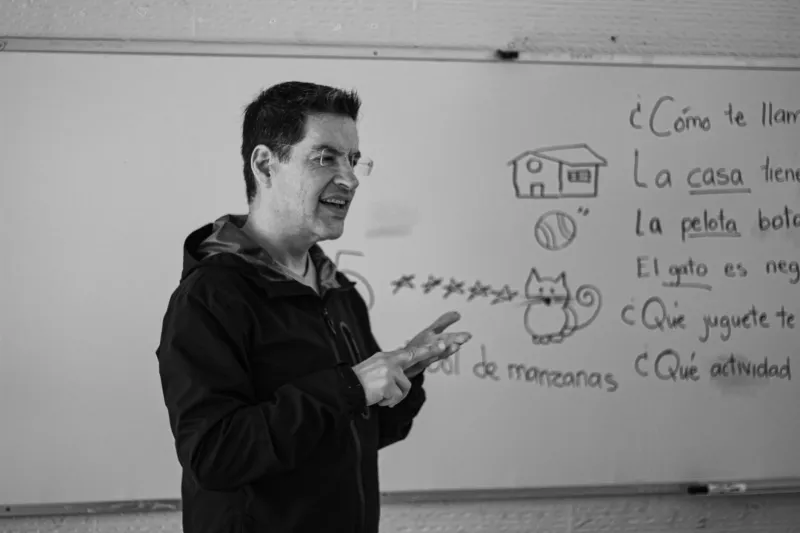
The generational negotiation plays out in committee meetings and Friday lunches. Some mosques have adopted a split format—Arabic first, English second—satisfying no one entirely but keeping the peace. Others have doubled down on bilingual khateebs who move between languages within a single sermon, a linguistic tightrope act that younger congregants describe as the first time the Friday prayer has felt addressed to them.
Why the Stakes Extend Past the Prayer Room
The khutbah may seem an unlikely barometer of American religious life, but it functions as the community's most reliable weekly assembly. Whoever holds that microphone holds the community's attention for twenty minutes a week—a mandate no podcast or TikTok account can replicate.
For the diaspora, the transformation carries a particular weight. The sermon is where language, generational change, and belonging are negotiated in real time. When a US-raised imam speaks about isolation, ambition, or the quiet grief of watching parents age across a cultural gap, he is not merely modernizing a ritual. He is telling a congregation of immigrants and their children that their specific American lives—the commute, the mortgage, the translated childhood—are subjects worthy of the sacred.
Whether the balance holds between the grandmother who wants her Arabic and the grandson who wants his relevance remains the open question. But for now, the microphone has changed hands, and the twenty minutes that follow sound more like America every Friday.