One Block, Three Flags, One Ballot Box: The Quiet Politics of America's Immigrant Main Streets
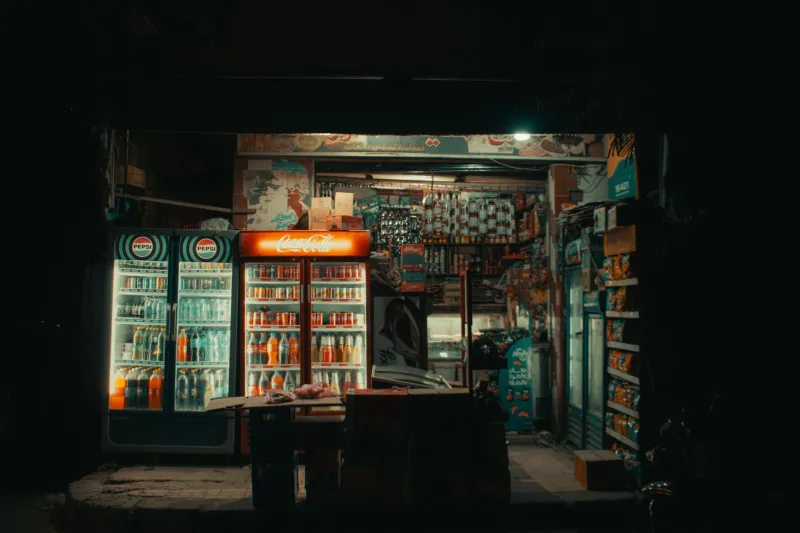
There is a street in almost every American city with a meaningful Arab population that locals can describe without giving its name. You know — the one with the halal butcher. The phrase is shorthand, and like most shorthand it conceals more than it reveals. What looks like a convenient row of shops is, on closer inspection, one of the most underexamined political geographies in the United States.
The Butcher as Infrastructure
Start with the butcher, because the butcher is usually first. Halal meat is not a luxury; it is a daily requirement, and its scarcity dictates where people will live. Families have moved apartments, and in some cases across state lines, to shorten the drive to a trusted slaughter source. Once the butcher opens, everything else follows: the bakery that sells the pita he wraps his lamb in, the grocer stocking sumac and freekeh, the phone shop wiring remittances home, the prayer space that begins as a rented storefront and ends, a decade later, with a purpose-built dome and a parking variance.
Urbanists have a term for this — agglomeration — but the residents of these streets describe it more plainly. One block becomes a village. The village becomes a destination. And a destination, in American municipal politics, becomes leverage.
From Zoning Hearings to School Boards
The political awakening is rarely dramatic. It usually begins with something small: a sign permit denied, a parking ordinance enforced selectively, a bakery cited for the smell of its own bread. Business owners who had never attended a public meeting find themselves standing at a podium, translating their grievance into the language of variances and setback requirements. They learn fast.
What they learn is that the block itself is a voting bloc — or can become one. A street of forty storefronts employs hundreds, serves thousands weekly, and sits at the center of family networks that stretch across a zip code. When a school board candidate needs a venue, the banquet hall above the grocery rents cheap and fills fast. When a council seat comes open, the imam's Eid sermon does not endorse anyone, but the crowd leaving the prayer space at noon is a fact every campaign consultant eventually learns to count.
The results are visible in ordinary places. Suburban districts in Michigan, Texas, and Virginia have hired Arabic-speaking staff, added halal options to cafeteria menus, and adjusted the academic calendar around Ramadan — not as gestures of goodwill, but because the math of enrollment and attendance made ignoring the community impossible.
The Limits of the Map
It would be sentimental to call this an unqualified success story. Concentration brings its own vulnerabilities. A single block can be redlined by insurers, surveilled by officials who mistake density for suspicion, or flattened by the same redevelopment fever that remakes every American main street. Political incorporation, once achieved, also hardens expectations: the block's leadership tends to be male, older, and commercially minded, and newer arrivals — particularly women and second-generation youth — often chafe at being represented by the man who owns the bakery.
There is also the question of what the block is asked to carry. Elected officials who once ignored the neighborhood now arrive expecting a unified position on everything from a foreign war to a sewer assessment. The community's answer — we are not a monolith — is accurate and, politically, frequently inconvenient.
What the Street Knows
Still, the deeper story stands. The American political imagination tends to picture power in marble buildings and national headlines. But a great deal of it is decided in rooms above halal groceries, in the slow accumulation of tax revenue, attendance figures, and votes that a single well-organized street can deliver.
The butcher did not set out to build a political base. He set out to sell meat to people who could not otherwise buy it. The politics arrived the way they always do in this country — when enough people gather in one place, the place starts to matter.