The Night Shift Barometer: What Detroit and Houston's Arab American Drivers Hear When the Meter Starts Running
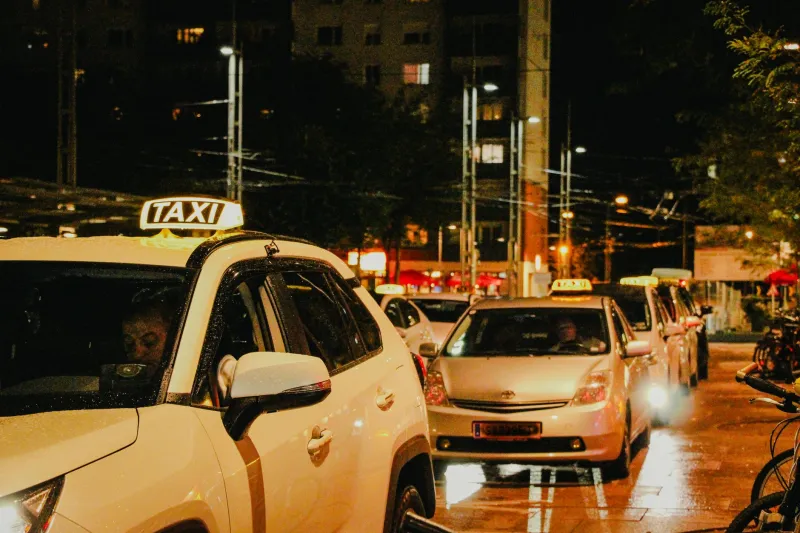
At 11:40 p.m. on a Tuesday, the arrivals level of Detroit Metropolitan Airport is mostly quiet except for the low hum of idling sedans and the occasional roller bag rattling across concrete. Sami, a sixty-one-year-old driver from Yemen who has worked the airport circuit for nineteen years, leans against his Camry and offers a summary of his profession that no pollster would dispute.
"People forget I'm in the car," he says. "They say things in the back seat they would never say at a dinner table."
For drivers like Sami — and for thousands of Arab and Muslim American cab and rideshare operators in Detroit, Houston, Chicago, and beyond — the back seat is an accidental listening post. Over a ten-hour shift, a driver might carry a defense contractor flying out of Dulles, a college student headed to Dearborn, a nurse coming off a night shift at the Texas Medical Center, and a salesman who wants to talk about oil prices. Multiply that by fifteen years of shifts, and you get something approaching a longitudinal study of American public opinion, conducted one fare at a time.
The Decade the Questions Changed
Ask longtime drivers what has shifted, and nearly all of them point to the same thing: the questions passengers ask have gotten more specific.
A Houston driver named Abu Tariq, who arrived from Iraq in 2009, remembers when conversation stopped the moment his accent was noticed. "Before, silence. Now, people ask about the news. They want my opinion. Ten years ago nobody wanted my opinion."
Several drivers describe a rough arc: the wariness of the 2010s, when a passenger might ask pointed questions about security or simply stare at the rearview mirror; the gradual normalization of Middle Eastern topics in everyday American conversation; and the current moment, in which passengers arrive with strong, often secondhand views formed by social media and cable news.
What surprises them most is not hostility. It is the volume of curiosity. "American people ask more questions than any other passengers," says a Chicago driver who works the O'Hare overnight shift. "Sometimes I don't know the answer. They think because I'm from Lebanon, I know everything about every country. I say, brother, I'm a driver, not a professor."
A Divided Back Seat
The drivers' anecdotes resist easy conclusions, which is precisely why they are valuable. In Houston, drivers report a sharp split between business travelers — often confident, often critical of U.S. involvement abroad — and oil and gas workers, who tend to focus on stability and prices rather than politics.
In Detroit, the picture is different again. Metro Airport funnels passengers into a metro area where Arab American communities are a visible, established presence, not an abstraction. Drivers there say passengers are more likely to mention a neighbor, a coworker, a restaurant. Proximity, it seems, softens rhetoric.
And in Chicago, several drivers noted that the youngest passengers — college students, often — are the most likely to bring up the region unprompted, with a fluency in the vocabulary of the conflict that would have been unimaginable a generation ago.
None of this amounts to scientific polling. But it captures texture that surveys miss: the hesitation before a question, the apology that often follows a blunt statement, the way a passenger's tone changes when they learn the driver has family in Sana'a or Ramallah.
What They Wish Passengers Understood
Asked what they would tell riders if given the chance, the drivers converge on a few points.
First, the region is not a single country, let alone a single opinion. "They say 'you people,'" Abu Tariq says. "Yemen is not Iraq. Iraq is not Egypt. We are not one person."
Second, that Arab Americans are watching American politics with the same mix of hope and exhaustion as everyone else — often more closely, because U.S. decisions land on their families directly.
And third, a small request that carries surprising weight: ask, don't assume. Sami puts it simply. "If someone asks me where I'm from, I'm happy. If someone decides before asking, that's different. The question is not the problem. The silence is the problem."
At midnight, the arrivals level fills again. Another flight lands, another line of passengers drifts toward the curb with their luggage and their certainties. The drivers straighten up, open the trunks, and get back to work — listening, as they always have, to America thinking out loud.