Six Digital Corner Stores: How the Diaspora Took Its Main Street Online
Ask any Arab American entrepreneur under forty where their customers come from, and the answer is rarely a storefront sign or a newspaper ad. It is a group chat. It is a cousin's Instagram story. It is the Dearborn foodies channel, the Bay Ridge aunties' WhatsApp thread, the Detroit-area Telegram group where a single photo of fresh maamoul can move inventory before the oven cools.
This is the digital souk — a distributed, self-organizing marketplace built on trust networks that predate the internet by generations. And at a moment when small businesses across the country are struggling with rising rents, tightening credit, and platform algorithm changes, it has become something more than a marketing tool. It is economic infrastructure. Here are six ventures that show how it works.
1. The Instagram Bakery That Outgrew Its Kitchen
In Paterson, New Jersey, a home baker specializing in Palestinian knafeh and date cakes began posting to Instagram during the pandemic. Within a year, she had a waiting list managed entirely through Instagram DMs and a WhatsApp broadcast list of several hundred customers. Her story is now common enough to be a template: no loan, no storefront, no advertising budget — just community word-of-mouth digitized. The challenge, she says, is the next step: commercial kitchen space in New Jersey doesn't come cheap, and the platform that made her can throttle her reach overnight.
2. The Halal Butcher With a Delivery App Deal
Dearborn's butcher shops have long anchored the community's food economy. The savviest operators have layered modern logistics on top — partnering with local delivery apps and, crucially, with community-run platforms that list Arab-owned groceries alongside national chains. One shop owner reports that weekend orders now arrive mostly through a Detroit-area Arab business directory app, insulating him from the 30-percent commissions that dominant delivery platforms charge.
3. The WhatsApp Group That Became a Marketplace
In Bay Ridge, Brooklyn, a neighborhood WhatsApp group started as a way to share mosque announcements has evolved into something resembling an informal chamber of commerce. Members post services — a plumber, a tutor, a caterer — and the group's informal reputation system does the vetting. Economists who study immigrant entrepreneurship call this "enclave economics"; the participants call it helping your neighbor. The effect is the same: capital, customers, and credit flowing through channels a traditional bank would never see.
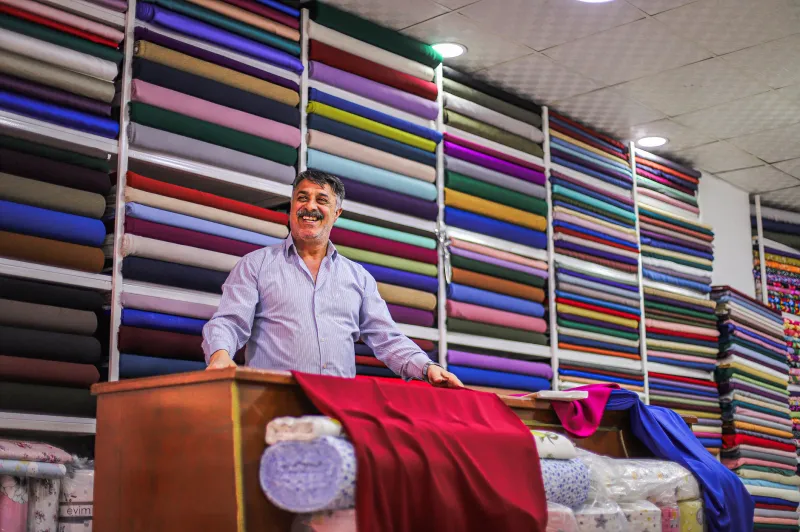
4. The Tailor Booking Through Instagram
A second-generation tailor in Virginia — outside Washington, D.C., in one of the fastest-growing Arab American communities in the country — takes appointments entirely through Instagram, posting before-and-after photos of thobes, abayas, and formal wear ahead of Eid. His peak seasons are perfectly legible to anyone who knows the community calendar: the two Eids, wedding season, and the weeks before graduation. His overhead is minimal; his visibility depends entirely on an algorithm he doesn't control.
5. The Community App Connecting the Strip Mall
In Anaheim, California, a group of small business owners launched a shared app listing every Arab-owned restaurant, market, and service provider in Orange County, with a loyalty program built in. The project emerged from a local chamber of commerce meeting and reflects a deliberate strategy: consolidate the community's purchasing power before outside platforms capture it. Early results are modest but measurable — and the model is being studied by similar groups in Chicago and Houston.
6. The Refugee-Women's Catering Collective
In the Detroit metro area, a catering collective founded by recently arrived Iraqi and Syrian women coordinates orders through a shared WhatsApp account and a bilingual website. The collective handles the parts of the business that individual newcomers find hardest — licensing, English-language marketing, food-safety certification — while the members handle what they do best. It is a reminder that the digital souk is not only a story about smartphones; it is a story about who gets a foothold in the American economy and how.
Why This Matters Beyond Business
Small businesses are the economic spine of Arab American communities — and, increasingly, a political one. When zoning boards, city councils, and state legislatures make decisions about commercial rents, delivery regulation, and access to capital, the businesses most affected are often the ones least represented in the room. The same digital networks that move knafeh and tailoring orders also mobilize voters, circulate information about small-business grants, and pressure local officials.
The digital souk, in other words, is not just commerce. It is a form of civic participation — one group chat at a time. The corner store went online. The neighborhood followed.