The Kitchen Table Divide: How Arab American Families Are Splitting Their Votes Across Generations
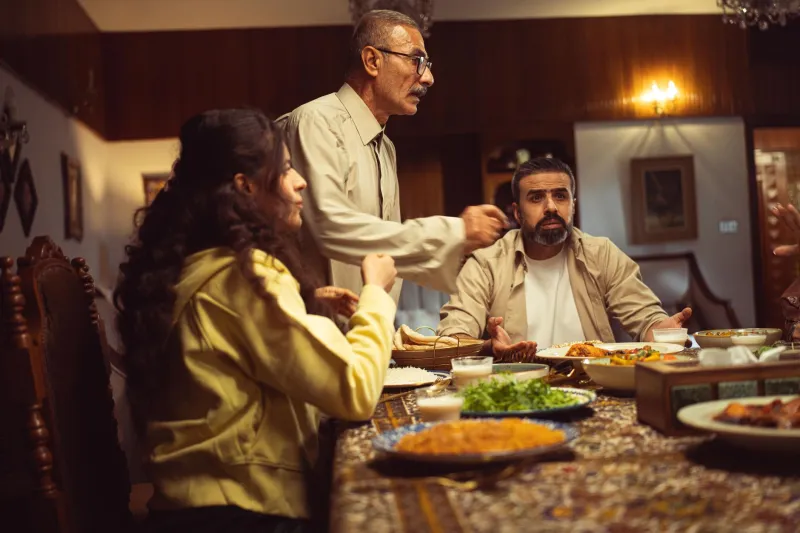
One Family, Two Ballots
On a quiet street in Dearborn, Michigan — the city with the highest concentration of Arab Americans in the United States — the Aboud family gathers most Friday evenings for dinner. The parents, who emigrated from Lebanon in the early 1990s, have voted reliably for one party for decades. Their two adult children, both born in suburban Detroit, have not.
"My son told me last year that he reads more Arabic news on his phone than I do," says the father, a small business owner who asked to be identified only by his first name, Samir. "But he reads it in English. He reads it differently. That's where our arguments start."
The Abouds are not an outlier. Across Arab American communities — from Dearborn to Bay Ridge in Brooklyn — political analysts, community organizers, and the families themselves describe a widening generational gap in how first-generation immigrants and their US-born children engage with American politics.
What the Numbers Show
Survey work by the Arab American Institute and academic researchers has documented a shift that accelerated after 2016. First-generation Arab American voters have historically prioritized a familiar cluster of issues: immigration policy, foreign policy toward the Middle East, and economic stability for family businesses. Their children, raised entirely within the American political ecosystem, tend to rank civil liberties, surveillance and profiling, climate policy, and broader social justice causes at or near the top.
The divergence is not a rejection of heritage — it is a relocation of it. Where a parent might evaluate a candidate primarily through the lens of US policy toward their country of origin, the second generation increasingly evaluates candidates through the lens of American identity itself: Does this party treat people like me as full citizens? Does it protect the constitutional rights my family exercises?
Campus activism has played an outsized role. Universities in Michigan, Illinois, New York, and California have become training grounds for political organizing within Arab American student associations, where foreign policy and domestic civil rights are framed as inseparable. A student who organizes around one cause is likely to carry that framework into every subsequent election cycle.
Social media compounds the effect. Parents often consume Arabic-language satellite television and community newspapers, while their children scroll through a mix of TikTok explainers, independent podcasts, and activist threads — a media diet that produces not just different opinions but different assumptions about what politics is for.
Dearborn: The Bellwether
Dearborn's political significance has grown with its population. The city and its surrounding county have become one of the most closely watched Arab American voting blocs in the country, capable of shifting margins in a swing state where presidential elections are decided by tens of thousands of votes.
Local organizers describe the generational split in practical terms. Older voters, they say, tend to be reached through mosques, community centers, and church halls — institutions that favor consistency and established relationships. Younger voters are reached through group chats, campus tables, and viral videos, and they are more willing to withhold their vote entirely if they feel their concerns are being taken for granted.
"My mother says voting is a duty, you pick the one who will do less harm," says Layla, a 24-year-old graduate student at the University of Michigan–Dearborn. "My generation asks why we should be grateful for the option of less harm. That's not ingratitude. That's what we were taught in civics class."
Her father disagrees, but he understands the argument. "We came here for stability," he says. "They were born with stability. They can afford to demand more. Maybe that's what we wanted for them all along."
Brooklyn: The Organizing Generation
In Bay Ridge and Sunset Park, home to one of the largest Arab communities in New York City, the generational dynamic takes on a different texture. The neighborhood's Yemeni, Egyptian, and Palestinian families have watched their US-born children move into organizing roles — tenant associations, city council campaigns, mutual aid networks — at a pace their parents never did.
Community organizers point to a structural reason: the second generation enters American civic life through school elections, student government, and local volunteering, treating political participation as ordinary rather than hard-won. Their parents, many of whom naturalized after years of paperwork and precarity, often view voting itself as the finish line of citizenship rather than the starting line.
The result is a household negotiation that plays out every November. Parents bring institutional loyalty and hard-earned caution. Children bring urgency, digital fluency, and a willingness to punish candidates who ignore them.
Neither Side Is Going Away
Pollsters caution against treating the Arab American vote as monolithic — it never was. The community spans multiple nationalities, religions, and classes, and internal disagreement is a feature, not a flaw. But the generational dimension is increasingly the most consequential one, because it determines not just who wins votes but who shows up.
If current patterns hold, candidates who engage Arab American communities solely through traditional gatekeepers may find themselves talking to the parents while the children organize elsewhere. And families like the Abouds will keep arguing across the dinner table — which, Samir notes, may be the most American thing about them.
"In my country, politics was something you survived," he says. "Here, my kids treat it like homework. I don't always like their answers. But I can't say they're wrong to ask the questions."