Exit 27 to Damascus: Driving the American Map in Search of Home
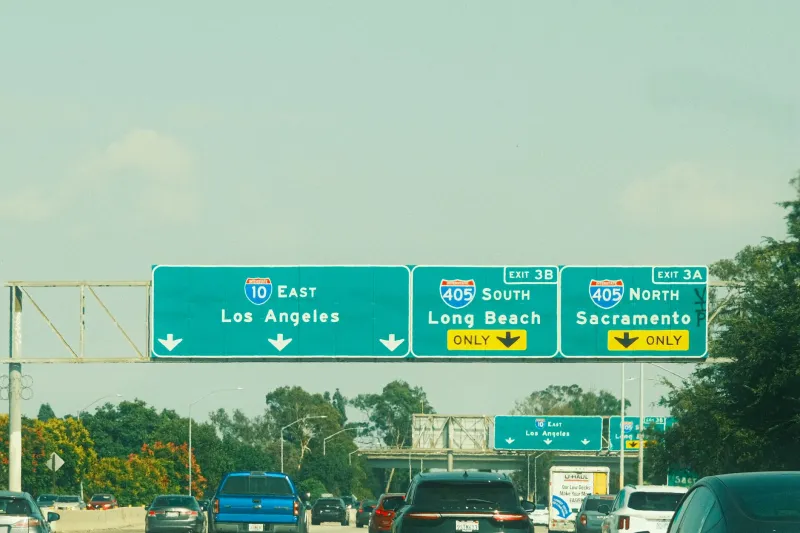
There is a moment familiar to many Arab Americans on long drives: the highway sign appears, green on white, and a word from childhood scrolls past at seventy miles an hour. Damascus, 5 miles. Or Cairo. Or Bethlehem. For a split second, the interstate becomes something else entirely — a road home that isn't.
The United States contains more than a dozen towns named Damascus, scattered from Virginia to Oregon. There is a Cairo in Illinois, another in Georgia, another in Nebraska. Bethlehem exists in Pennsylvania, Connecticut, and New York. Ramallah has not yet been incorporated, but streets named Ramallah Road appear in suburban subdivisions from Michigan to California. The map of America, examined closely, is faintly inscribed with the Levant.
Coincidence, Pilgrimage, and Speculation
The origins of these names vary more than residents assume. Some are biblical inheritances — the Bethlehem of Pennsylvania was christened in 1741 by Moravian settlers on Christmas Eve, a full century before meaningful Arab immigration to the Americas. Others owe their names to a nineteenth-century American fascination with the Holy Land, when Protestant townspeople reached for the exotic to dignify a crossroads hamlet.
A smaller number trace directly to Arab immigrants themselves. In the early twentieth century, Syrian and Lebanese peddlers and merchants settled in the American South and Midwest, and in a handful of cases their presence left a mark on local geography. Historians of Arab American migration — Alixa Naff's work foremost among them — documented communities in places like Fort Wayne, Indiana, and rural Texas, where the earliest arrivals often became the town's grocers before the town knew what to call them.
And some names are pure accident, a surveyor's whim or a developer's marketing instinct. The result is a landscape in which genuine heritage and hollow gesture sit side by side, indistinguishable to the passerby.
What the Sign Says to the Driver
For residents who arrived later, the effect of these names is rarely neutral. A Palestinian American engineer outside Sacramento describes taking a detour solely to photograph a road sign bearing his grandmother's city. An Egyptian-born nurse in southern Illinois reports that her first winter in Cairo — pronounced, to her enduring disbelief, "KAY-ro" — felt like a private joke the town was telling without knowing it.
The dissonance is part of the experience. The American Damascus has no Umayyad Mosque. The American Cairo has no Nile. What they offer instead is something smaller and stranger: a phonetic echo, a reminder that the diaspora's geography is layered, that home can appear where you least expect it, wearing a different accent.
Some residents, interviewed for this piece, admitted they had never wondered about the name at all. Others had researched it, traced it to a settler's Bible or a land company's brochure, and found the excavation oddly moving. The name persists even when the meaning has evaporated — a linguistic fossil that happens to spell out a city where millions still live.
Reading the Landscape Backward
There is a broader point hiding in these map margins. American place names are usually read as a record of European settlement — the Paris, Texases and Dublin, Ohios. The Arabic-inflected names complicate that story quietly, suggesting that the Middle East was present in the American imagination long before the twentieth century made the region a fixture of foreign policy.
For the Arabic-speaking diaspora, these towns also pose a question about ownership. Does a name belong to the people who coined it, the people it honors, or the people who live under it now? The answers differ in Damascus, Virginia — population under 1,000, best known for trail-hiking — and Damascus, Oregon, a Portland suburb that spent years fighting over whether to incorporate at all. Neither has a significant Arab population. Both, nonetheless, carry the name into every postal address, every school district, every local news broadcast.
A Map Worth Keeping
There have been efforts, informal and affectionate, to catalog this geography. Online mapping projects track American towns with Arabic and biblical Middle Eastern names; diaspora group chats circulate screenshots when a new one surfaces. It is a modest genre of digital folklore, but it serves a function: it lets second- and third-generation Arab Americans see themselves as part of the physical American landscape, not merely its recent arrivals.
The highway sign does not explain any of this. It simply states the name and the distance. But for the driver who knows both countries, that green rectangle holds a small, durable truth — that the distance between here and there has always been shorter than the map admits, and that America has been writing Arabic into its geography, letter by letter, for longer than anyone thought to notice.