The Auction Block and the Embroidered Dress: Sorting a First-Generation Life in America
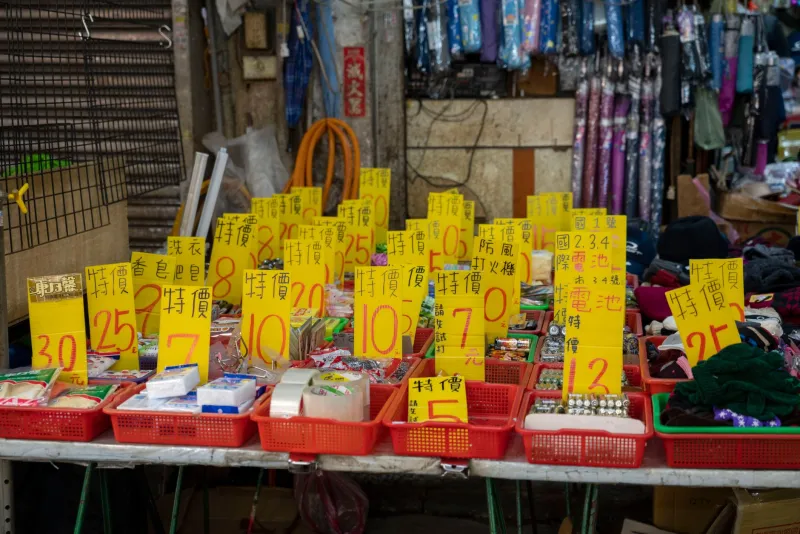
The sign appeared on a Saturday morning in suburban Dearborn, the way such signs do across America: Estate Sale — Everything Must Go. But inside the modest brick house, the inventory told a different story than the one printed on the sign. This was not the estate of a retired Ohio insurance adjuster. This was the estate of Um Khaled, who arrived from Nablus in 1972 with two suitcases and a sewing machine, and who spent fifty years building a life whose physical remains now sat on folding tables with masking-tape price tags.
Her children — three of them, all born or raised in Michigan, all fluent in a way their mother never quite was — walked through the house the day before the sale opened. What they kept, what they priced, and what they left for strangers to haggle over became, inadvertently, a final act of translation.
The Inventory of a Translated Life
Walk through any first-generation Arab American household approaching its end and you will find a peculiar bilingualism of objects. The garage holds the American half: a lawn mower, a snowblower purchased after one too many Chicago winters, a Toyota with 180,000 honest miles on it. These items translate cleanly. The estate sale companies know exactly what they're worth.
The living room is another matter entirely.
There, on the shelves, sits the untranslated half of the family: a tea service with gold filigree brought from Damascus in pieces wrapped in a newspaper nobody saved, a framed calligraphy of verse the grandchildren cannot read, a hand-crank coffee grinder from a village that has changed names twice since it was purchased. Estate sale appraisers — competent, kind, entirely unqualified for this — assign these objects values ranging from "$15" to "make an offer."
The gap between an object's market price and its actual weight is where the second generation lives.
What Gets Sold
The cassettes go first, almost always. Shoebox after shoebox: Umm Kulthum, Fairuz, wedding recordings from Amman in 1984, a cassette of a grandmother's voice — unlabeled — that nobody will ever play because the family no longer owns a machine that reads that format. At the sale, they go for a quarter each. A collector, or more often another Arab American family doing its own downsizing, buys the whole box for the price of a sandwich.
The furniture follows. The mamoul press, the enormous rice pot, the fifty-year-old tea glasses with the chipped rims — these are priced as kitchenware. And in a sense, that's what they became. Their function outlived their story. The stories, being oral and untranscribed, died with the teller, or worse, survive in fragments: that was from Aunt Samira, or maybe she just liked it.
There is no shame in any of this. The children are not callous. They are simply performing the same triage their parents performed decades earlier, when they decided which customs to keep and which to let the highway of American life take. The house is just the last ledger.
What Gets Kept
And yet. Watch closely at any of these sales and you'll see the counter-movement — adult children in their forties and fifties pulling objects out of the piles with a suddenness that surprises even them.
The embroidered thobe is the most reliable keeper. A dress hand-stitched in Ramallah or Sana'a or the Bekaa Valley, its cross-stitch patterns encoding a village, a season, a marital status — this object almost never makes it to the sale table. It migrates to a closet in a suburb of Houston or northern Virginia, where it will hang, unworn, for another thirty years, a garment transformed into an archive.
The Qur'an and the prayer rug go without saying. But so do stranger things: the hand-crank grinder, the framed embroidery of the Kaaba made by a great-aunt, the dentures cup — no, not that — the brass mortar and pestle worn smooth on one side from fifty years of crushing garlic. The children cannot articulate why they keep what they keep. They keep by feel, the way their parents once chose which English words to learn first.
Objects as the Last Bilingual Space
Here is what the estate sale reveals that no census form can: material culture is the final bilingual space, the last room where both languages are spoken at once. An object like the tea set speaks American — it sits in a living room, it holds Lipton when company comes. But it also speaks Arabic — it insists on being used a certain way, on the mint being fresh, on the host pouring for everyone before sitting down.
The second generation, raised between languages, often loses the second one. The grandchildren more so. But objects are patient teachers. A child who cannot read the calligraphy on the wall may still grow up knowing, in her hands, how tea is supposed to be poured. That knowledge has no written form and needs none.
This is why these sales feel different from other American estate sales. When the children of Um Khaled finished their walk-through, they had filled one car trunk. Not with valuables — with load, with weight. A dress, a grinder, a framed verse, a cassette they intend to digitize at a library in Dearborn that converts old formats. The rest went on sale the next morning, and by Sunday evening most of it was gone, dispersed into other Arab American homes where it will begin the long process of being re-remembered.
Everything Must Go, Almost
The sign is a lie, of course. Everything does not go. Something always goes home in a trunk, wrapped in a bedsheet, riding shotgun in a Honda Odyssey through the streets where Arabic is the second language of the billboards.
Estate sales are marketed as endings, but for diaspora families they function more like distribution — the scattering of an archive into new hands, priced at whatever the market will bear and valued at far more than anyone will say out loud. The thobe in a closet in Texas, the grinder on a shelf in Virginia, the cassette waiting for a digitization machine: these are the estate's real beneficiaries, the heirs no lawyer ever named.
Um Khaled's house sold in the spring. Her children, when asked what they kept, give the same answer every immigrant family gives: a few things. Nothing much.
They are not lying. They are translating.