Decibels and Democracy: Five American Town Halls That Debated the Call to Prayer
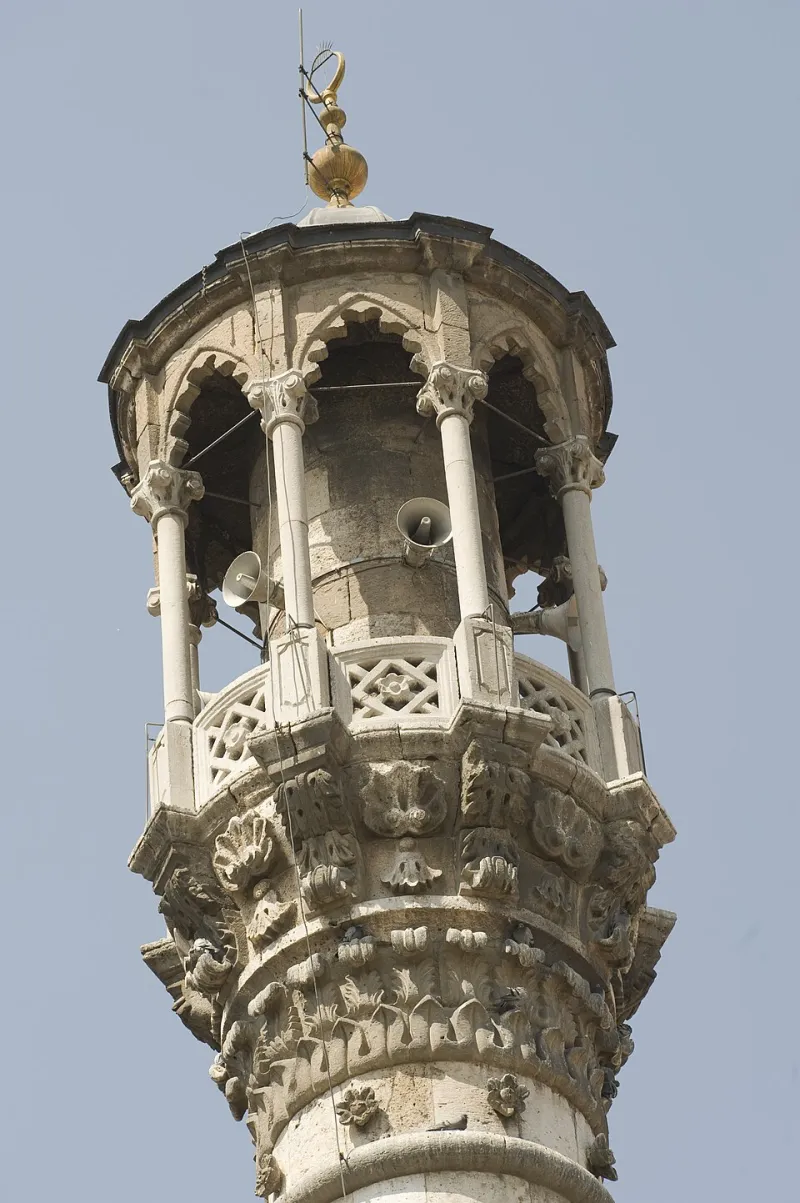
Photo: Dosseman, CC BY-SA 4.0, via Wikimedia Commons
The call to prayer lasts about ninety seconds. What it takes to be permitted to amplify it, in an American city, can last years. The azan has been recited quietly inside American mosques for a century, but the moment a community asks to project it outdoors, the request lands in an unfamiliar arena: the municipal noise ordinance, the zoning board, the public comment period. What follows is rarely a simple yes or no. It is a negotiation — sometimes ugly, occasionally inspiring, always revealing.
Hamtramck, Michigan: The Precedent
The story usually starts here. In 2004, this small city entirely surrounded by Detroit — home to a large Yemeni and Bangladeshi community — became, by city council resolution, the first American municipality to permit the azan to be broadcast over loudspeakers. The debate was fierce: opponents invoked noise and separation of church and state; supporters noted that church bells enjoyed similar accommodation. The council's 3–1 vote settled it, and the city's mosques have called the faithful ever since. Two years later, Hamtramck's council became majority Muslim — a fact that made national headlines and, locally, changed remarkably little about how the city ran. The azan became, in the truest sense, a non-event.
Paterson, New Jersey: The Ordinance
Paterson, home to one of the country's largest Muslim communities, took a different route. Rather than a symbolic resolution, the city wrote the accommodation into law, amending its noise ordinance to permit amplified calls to prayer between dawn and evening — with decibel limits. The compromise was characteristically New Jersey: nobody got everything, everybody got something. The measure survived legal challenge and has become a template cited by other municipalities.
Hamtramck's Neighbors: The Ripple Effect
What followed the 2004 vote mattered as much as the vote itself. Cities with significant Muslim populations — parts of Dearborn, various New Jersey townships — watched the litigation and public reaction closely. Some quietly permitted unamplified outdoor calls; some granted mosque-by-mosque exceptions through zoning variances. The pattern that emerged across the country was one of case-by-case accommodation rather than sweeping policy, which is, historically, exactly how most religious liberty in America has actually worked.
The Courtroom Version
Not every dispute stayed in city hall. Where municipalities refused accommodation outright, mosques occasionally went to federal court, arguing that flat prohibitions on amplified azan — while church bells rang freely — violated free exercise and equal protection. Courts have generally required governments to treat comparable religious and secular sound alike, a principle that sounds abstract until it is applied to a loudspeaker on a Friday afternoon in a working-class neighborhood.
What the Fights Were Actually About
Strip away the decibels and the fights were rarely about sound. They were about belonging — about whether a neighborhood's soundscape could change and who had the standing to object. Notably, the cities that navigated the question successfully did so through the most ordinary civic machinery available: public hearings, amendments, compromises on hours and volume. The azan did not transform these places. It was absorbed into them, the way church bells and ice cream trucks were absorbed before it.
For diaspora readers, the lesson is worth holding onto. The dramatic fights make the news; the quiet ones make the map. The call to prayer now rises, at legal volume, over streets in Michigan and New Jersey — ninety seconds, twice a day, about as controversial as the time of day it announces.