The Suitcase That Changed Hands Four Times: How Arab America Built an Economy Out of Trust
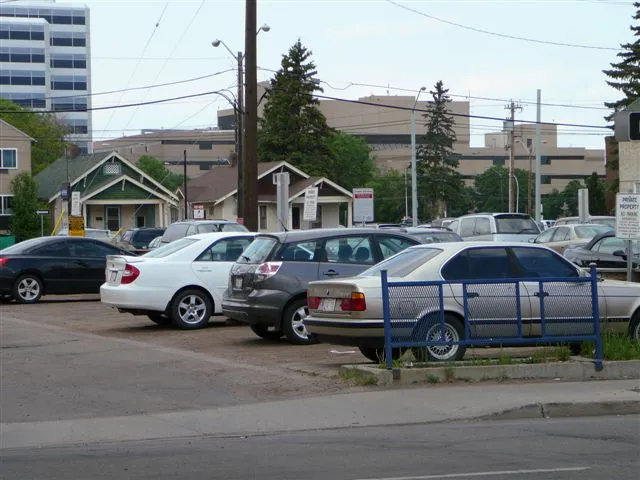
Photo: Johntwrl (talk) (Uploads), Public domain, via Wikimedia Commons
The dress had already attended three weddings before it reached Salma's closet in Dearborn.
The first bride wore it in Amman. The second, her cousin, wore it in Chicago. The third listed it on an Arabic-language Facebook group for $400, half of what it cost new, with a caption that read less like an advertisement and more like a blessing: worn twice, no flaws, just finished with it. Salma, a graduate student paying her own tuition, added her name to the comment thread within an hour. When she picks it up this weekend, she will pay in cash, inspect the hem in the seller's driveway, and drive away with a garment that carries more history than most heirlooms — and a receipt that exists only in the memory of two women who have never met before.
This is the second-hand suitcase economy, and it runs quietly beneath the visible surface of Arab America.
The Infrastructure Nobody Built
Formally speaking, none of this exists. There is no app called Souq al-Mahallat — the neighborhood market — though a dozen Facebook groups with names like it serve the purpose. There is no chamber of commerce governing the WhatsApp threads where families in Houston, Dearborn, Bay Ridge, and Anaheim trade furniture, strollers, pressure cookers, and occasionally a used car with a transmission issue disclosed only after the sale.
Yet the volume is remarkable. In the largest of these groups — some exceed 50,000 members — a listing for a KitchenAid mixer or a child's winter coat can draw thirty responses in an afternoon. Sellers post in Arabic, English, and the hybrid Arabizi script that marks a generation raised between two alphabets. Prices are negotiated in voice notes. Disputes are settled in the comments, publicly, in a way that makes reputation the only currency that matters.
Anthropologists have a term for what's happening: informal economic infrastructure. The diaspora has a simpler one: el-hay'a — the community. The network works because everyone in it is, to some degree, accountable to everyone else.
Why the Parking Lot Matters
Every mosque with a Friday prayer schedule doubles as a marketplace. After services in Dearborn, Paterson, and Virginia, the lots fill with the low theater of second-hand commerce: trunks open, car seats folded down, a dining table balanced precariously across two sedans while a buyer circles it, tapping the wood.
For newly arrived families — refugees from Syria and Iraq, students from Egypt and Lebanon on tight visas — these transactions are often the difference between settling in and drowning. A furnished apartment in America costs thousands; the same apartment furnished through the mosque lot costs a fraction. The appliance that arrives with a story attached (my mother used it, we're moving back) costs less still.
But reducing this to thrift misses the point. Economists who study immigrant communities have long noted that informal resale networks function as financial survival tools and as social glue simultaneously. The woman selling her late father's furniture is not merely liquidating assets; she is choosing who receives them. The buyer who pays a little extra and refuses the discount is not being irrational; she is participating in a ritual of dignity that a price tag cannot capture.
What It Reveals About Assimilation
There is a temptation, in American commentary, to read these networks as a failure to assimilate — a sign that a community has stayed huddled in its own economy rather than entering the mainstream. The record suggests the opposite.
The same families buying a crib on Facebook Marketplace are also maxing out 529 plans and arguing at kitchen tables about municipal ballots. The informal economy is not a substitute for American life; it is the ballast that makes American life affordable. It is what allows a first-generation family to send remittances home, keep a second car on the road, and absorb the shock of a medical bill without a payday lender.
And the networks are evolving. Younger Arab Americans — the ones who grew up translating for their parents — now run Instagram-based vintage accounts, thrift-flipping abayas and jellabas to audiences well beyond the community. The suitcase has gone mainstream; only the language of the transaction remains bilingual.
The Limits of Trust
None of this is romantic. Scams circulate. The pressure cooker that leaked, the 'gently used' sofa with a bedbug history, the cousin-of-a-cousin who vanished with a deposit — every group has its cautionary tales, recounted with the relish of legend. And the same tight networks that protect buyers can exclude outsiders: newcomers without connections, or non-Arab neighbors who see the parking lot commerce as clutter rather than culture.
The deeper tension is generational. The parents who built these networks out of necessity watch their children, raised on next-day delivery, treat the same groups as entertainment — a place to haggle for fun over a $15 lamp. The elders' economy was survival. The children's economy is memory. Both are real, and they meet, as everything in the diaspora does, somewhere between the two languages.
What the Suitcase Carries
Salma's wedding is next spring. The dress she bought for $400 will be worn once, photographed extensively, and then — almost certainly — listed again in an Arabic Facebook group, with a caption that has already been drafted in her head.
Worn once, no flaws, just finished with it.
In that sentence lies an entire economic philosophy: that objects outlast occasions, that communities can underwrite one another without a bank in the room, and that the truest ledger of a diaspora is not what it earns but what it passes along, hand to hand, parking lot to parking lot, suitcase to suitcase.